
Why an Outdated Website Costs You Trust And How to Modernize for Success
Your website’s design is often the first impression people have of your business, and that impression happens in seconds. When visitors see outdated layouts, clunky navigation, or old typography, they immediately form a narrative, perhaps that your business is behind on trends or not adapting to modern needs. This is not a superficial problem; it’s a psychological barrier to trust that you must overcome.
Trust online is fragile. When potential customers encounter an outdated site, they might question whether your business is still active, whether you pay attention to detail, or whether you invest in the customer experience. In a competitive market, trust is currency. An outdated design may be unintentionally signaling that you’re stuck in the past, causing potential clients to click away to a competitor who appears more current.
Updating your design isn’t just about aesthetics; it’s about aligning your brand with modern expectations. Clean layouts improve usability, modern fonts evoke professionalism, and cohesive branding ensures consistency across platforms. By refreshing your digital presence, you show customers you’re forward-thinking and invested in their experience. It’s a signal that you’re adaptable, reliable, and ready to meet today’s needs.
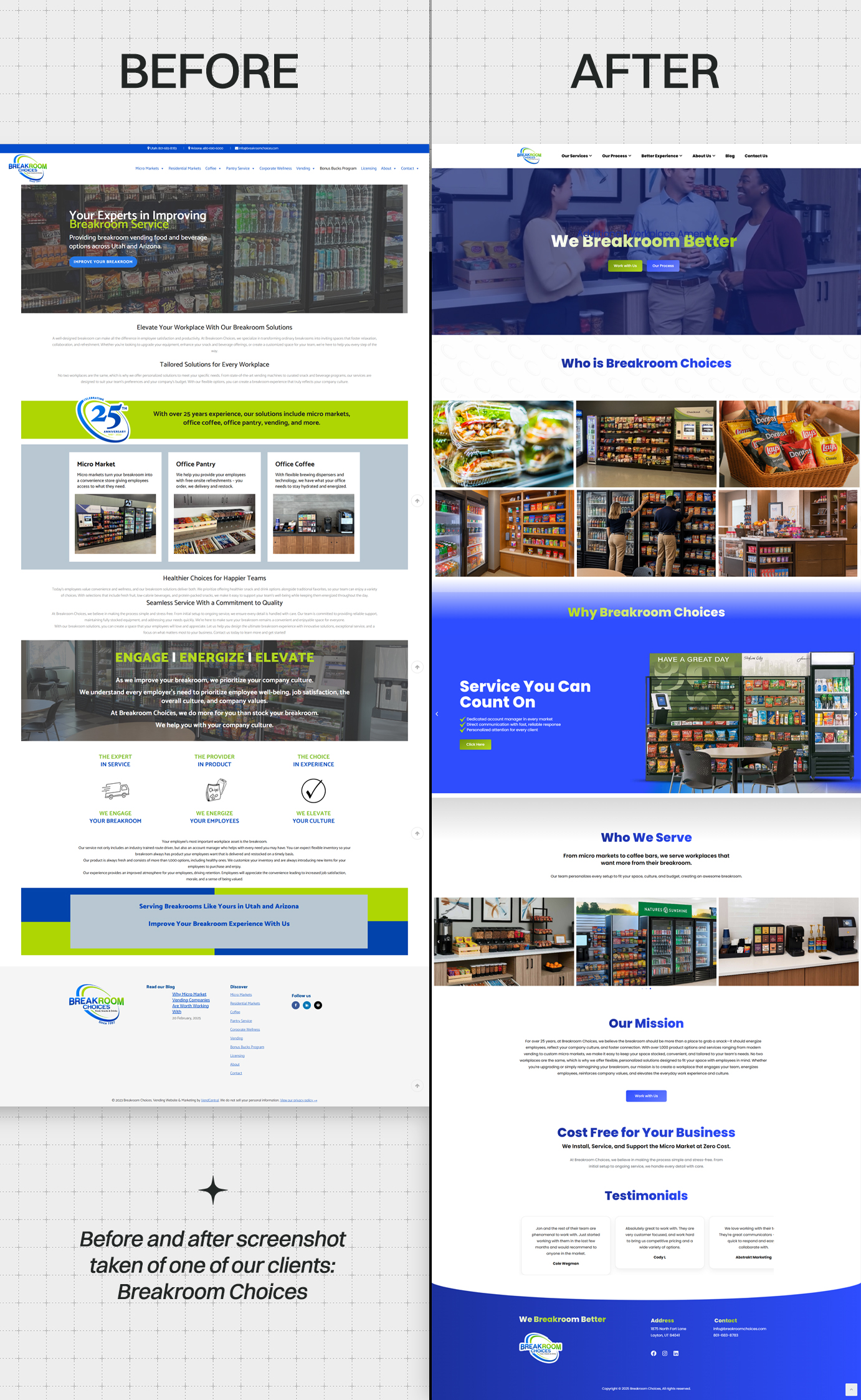
Ultimately, your website is one of the few elements of your brand you fully control. Every visitor interaction is an opportunity to craft how your brand is perceived. By ensuring your design stays current, you remain competitive, memorable, and aligned with customer expectations. In an era where trust is built quickly (and lost just as fast), a modern website ensures that people feel confident that your business is ready not just for today, but for the future.
When updating your website, there are key elements to keep in mind to ensure it stands the test of time. Start with mobile responsiveness; a large portion of visitors will be on phones or tablets. Next, focus on site speed; a fast-loading site keeps users engaged. Ensure your navigation is intuitive, so users can find what they need without guesswork. Incorporate modern design trends, use whitespace effectively, choose contemporary fonts, and ensure your imagery is high quality. Finally, integrate clear calls to action that guide your visitors toward your goals, be it contacting you, making a purchase, or subscribing. This checklist ensures your refreshed site isn’t just modern today, but adaptable to tomorrow’s expectations.
If you found this valuable, be sure to subscribe to my YouTube channel for weekly tips on web design and conversion strategies.

Discover more from Hello Heladio
Subscribe to get the latest posts sent to your email.